

Overview
Standalone Runs let you execute browser automations on demand. It’s the simplest way to run your browser automations. Use Standalone Runs when you need to trigger a browser automation:- In response to user actions — Submit a form when a user clicks “Apply Now”, fetch account details on request, or pull data when a customer connects their account
- As part of a workflow — Scrape data for a single item, validate a URL, or extract information from a page as one step in a larger process
How it works
Project configuration
Your replication settings control how many Runs can execute at the same time.maxCount sets the most machines your project can scale up to, and minCount sets how many stay ready at all times.
- Online IDE
- CLI
Select Files > Intuned.json. Update the settings as needed.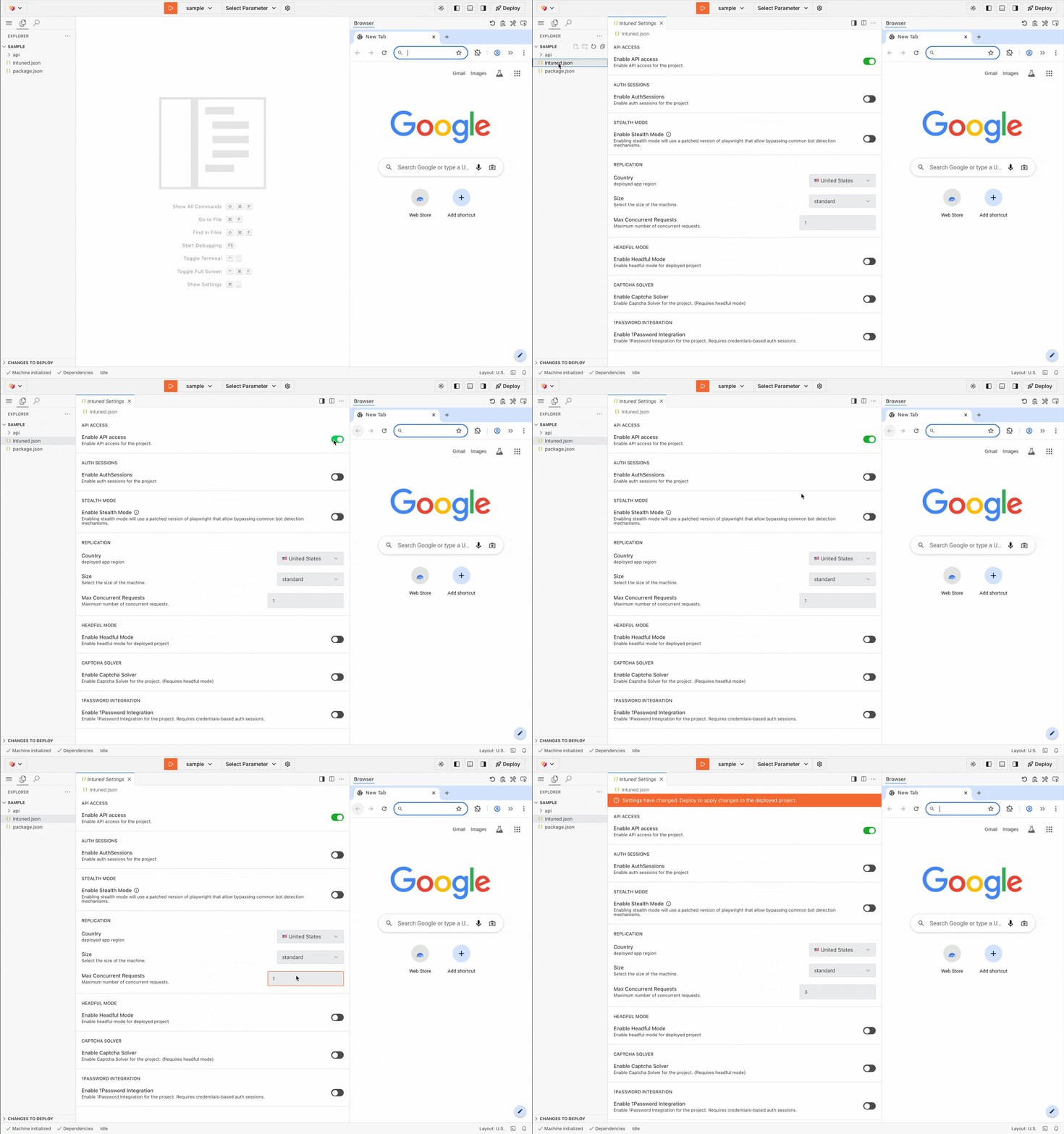
minCount machines ready to handle requests. Each Run is picked up by one machine. As Runs come in and the ready machines get busy, the project scales up—adding machines up to maxCount. If all machines are busy at the ceiling, additional Runs wait in a queue.
Machines added above your minCount baseline are removed when they’re no longer needed. You’re billed for active compute only—idle machines, including your minCount baseline, aren’t billed when they’re not running anything.
Your workspace has a limit on total deployed machines across all projects.
Contact support if you need to increase this limit.
Triggering a Standalone Run
Before triggering a Standalone Run, make sure your project is deployed.
- Dashboard (Playground)
- API
- CLI
From the dashboard, go to Your Project > Runs > Start Run. Enter all the inputs for your Run and select “Start Run” to trigger it. Once triggered, you’ll be redirected to the Run details page where you can monitor progress and view results.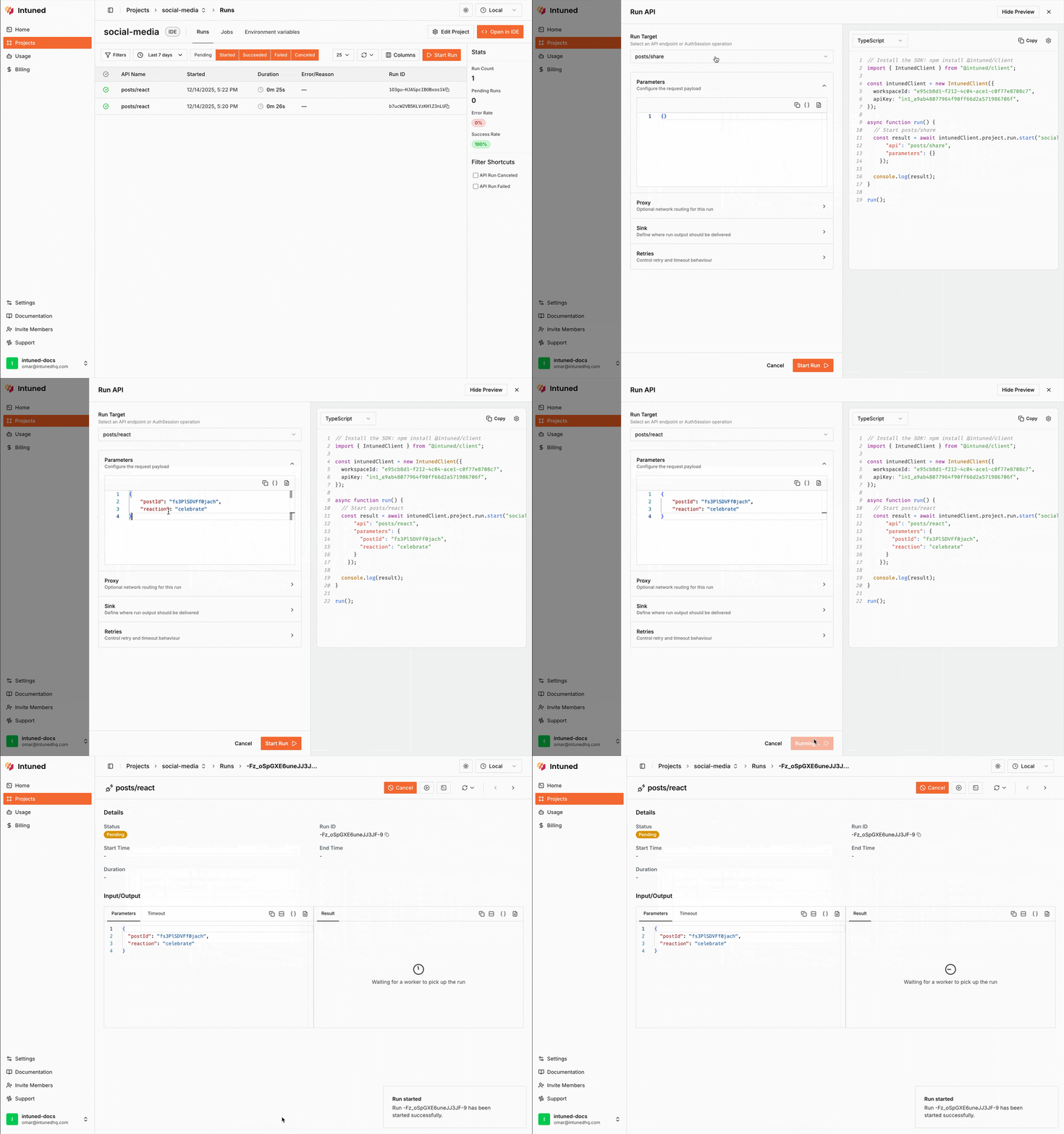
Get results without polling
Intuned supports webhook and S3 sinks to deliver Run results automatically when complete.- Dashboard (Playground)
- API
- CLI
While you have the Run Playground open to start a Run, select the Sink tab to configure webhook or S3 sinks for result delivery.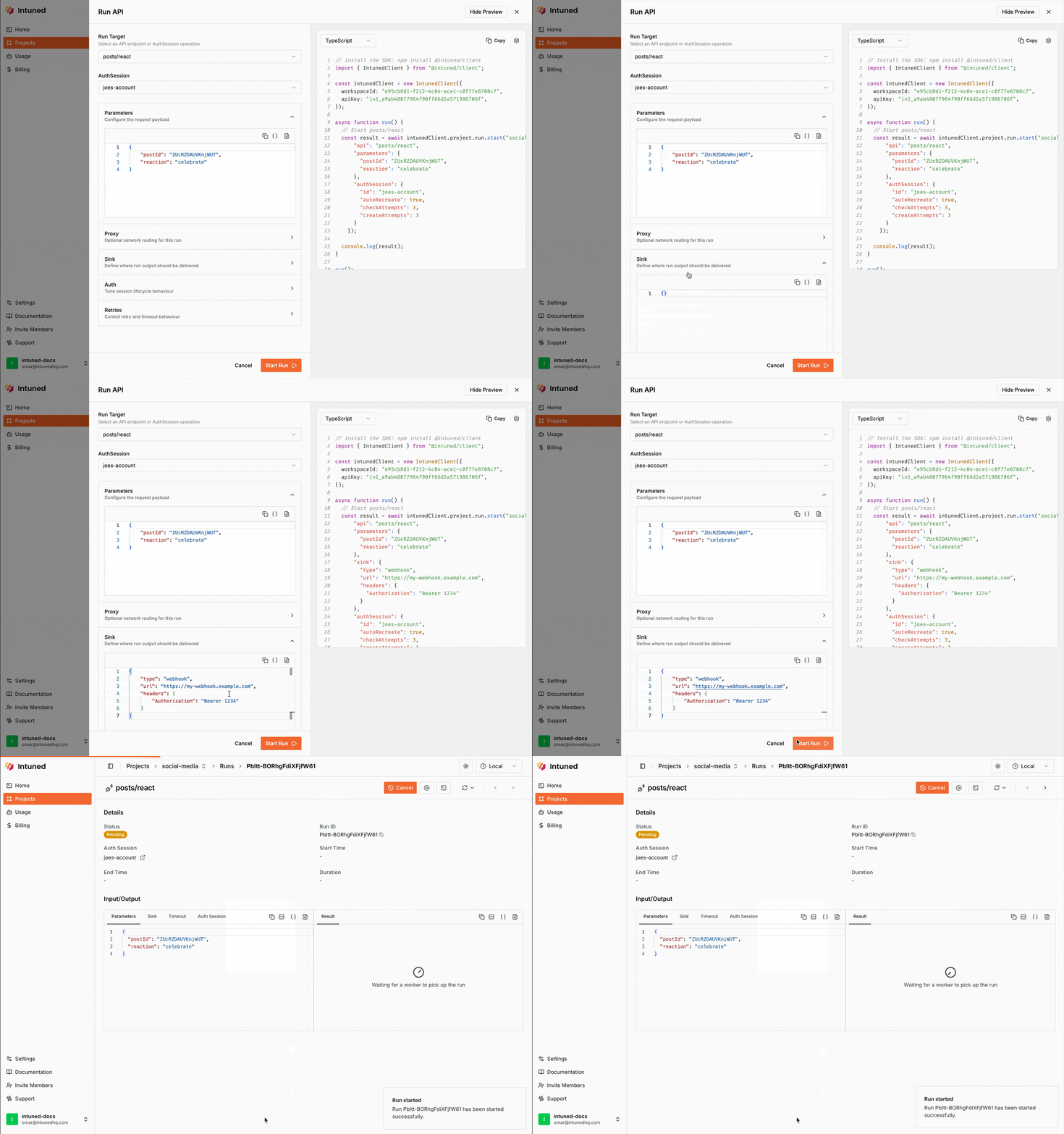
AuthSession Support
For authenticated Projects, each Run must specify an AuthSession to use. Before each Attempt runs, Intuned automatically validates the AuthSession and can recreate it if needed. This ensures your automation code never runs with an invalid session.Runs use
authSession (camelCase) in TypeScript and the REST API. This is
different from Jobs, which use auth_session (snake_case) in all languages.
Python SDK uses auth_session for both.- Dashboard (Playground)
- API
- CLI
While you have the Run Playground open to start a Run, select the AuthSession to use in the Authentication section and configure it.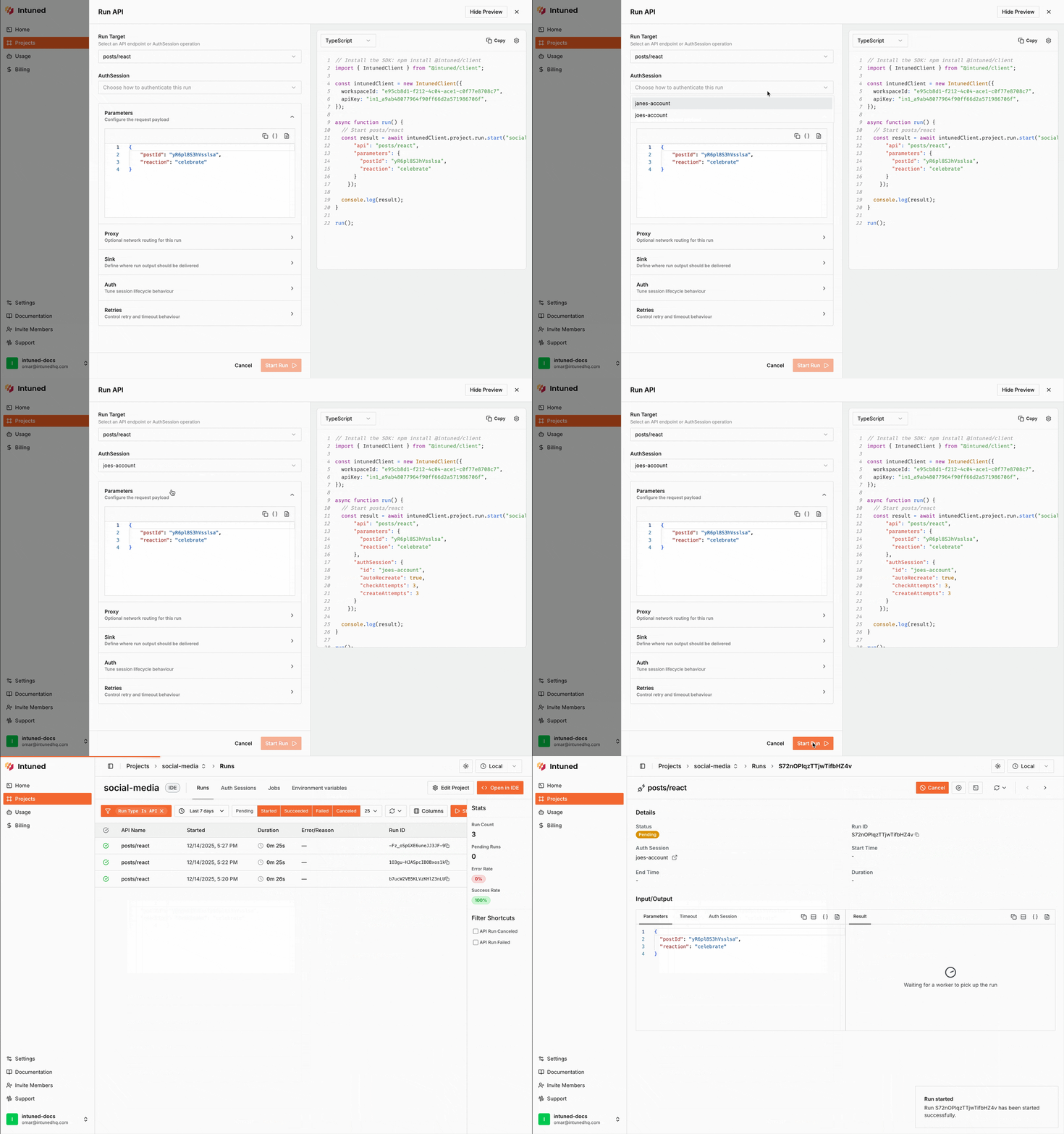
Execution model
When you start a Standalone Run, it executes a single API with the parameters you specify. Browser automations can sometimes fail due to temporary issues (network problems, element not found, timeouts). To handle this, Runs support automatic retries through multiple Attempts. The Run will try one or more Attempts until it succeeds or runs out of retries. Each Run produces a result or error based on the final Attempt’s outcome. Each Attempt has its own result or error, along with detailed logs and a browser trace for debugging. The Run starts in aPending state, transitions to Started when an Attempt begins, and finally to Success, Failed, or Canceled based on the outcome.
For more details about Runs and Attempts, see Intuned in depth: Runs and Attempts.
Monitoring
Intuned tracks every Run and its Attempts, giving you full visibility into your automation executions. From the dashboard, you can view Run records, inspect individual Attempts, and access detailed logs and browser traces for debugging. For more details, see Monitoring and traces.Best practices
- Choose an appropriate maximum concurrent requests value based on your expected load. While you’re not charged for idle compute time, setting a reasonable limit helps manage resource usage effectively.
- Set request timeouts to reasonable values to ensure that failed Attempts are detected quickly, allowing for faster retries and reducing overall execution time.
- Use sinks (webhook or S3) to receive Run results automatically, reducing the need for polling and improving efficiency.
- If your use case involves batch or scheduled executions, consider transitioning to Jobs for better management and scalability.
- Set appropriate retry attempts. Increase retries for websites with flaky behavior or network issues to improve success rates.
Limitations
- Workspace machine limit: Your workspace has a limit on total deployed machines across all projects. If you need more capacity, contact support to increase this limit.
- Sink delivery is at-least-once: Results sent to sinks may be delivered multiple times in rare failure scenarios. Make sure your webhook or processing logic handles duplicate deliveries idempotently.
FAQs
What's the difference between Standalone Runs and Jobs?
What's the difference between Standalone Runs and Jobs?
Standalone Runs execute a single API immediately when you call the endpoint. Jobs orchestrate multiple API executions together with scheduling, retries, and concurrency management. Use Standalone Runs for one-off or user-triggered executions; use Jobs for batch processing and recurring automations.
How do retries work?
How do retries work?
Each Run can have multiple Attempts. If an Attempt fails, Intuned
automatically retries up to your configured
maximumAttempts (default is 3).
Each Attempt has its own logs and browser trace for debugging. The Run
succeeds if any Attempt succeeds, and fails only after all Attempts are
exhausted.Can I cancel a Run in progress?
Can I cancel a Run in progress?
Yes. Use the Run cancel
endpoint with the
Run ID to cancel a pending or running Run. The Run status changes to
Canceled, along with any pending Runs that depend on it.Two cases cannot be canceled this way: a Run that already finished returns
409, and a Run that belongs to a Job returns 400 — terminate the JobRun instead.How long can a Run take?
How long can a Run take?
Each Attempt has a configurable
requestTimeout (default 600 seconds / 10 minutes). If an Attempt exceeds this timeout, it fails and triggers a retry if attempts remain. For long-running automations, increase the timeout or use extendTimeout within Jobs.Related resources
AuthSessions
Authenticated browser automations
Run API reference
Programmatic access to Standalone Runs
Sinks API reference
Webhook and S3 result delivery
Monitoring and traces
Debug and monitor Run executions